
The landscape of education has been dramatically reshaped in recent years, with technology playing an ever-growing role in how students learn, how teachers teach, and how educational institutions manage their operations. Gone are the days when traditional chalkboards and textbooks dominated the classroom; today, digital tools, online platforms, and innovative teaching methodologies are transforming educational experiences at every level. From K-12 schools to higher education institutions and corporate learning environments, the integration of technology in education has become a hallmark of modern pedagogy.
As we look toward the future, several key trends in education technology have emerged, each offering unique opportunities and challenges. These trends are not just shaping the way education is delivered, but also how it is experienced. This article explores some of the most significant trends in educational technology and provides insight into how they are changing the educational landscape.
1. Artificial Intelligence (AI) and Machine Learning in Education
Artificial intelligence (AI) and machine learning are among the most transformative forces in education today. These technologies are being used in a variety of ways, from personalized learning experiences to administrative efficiencies, and their impact is only set to grow. AI-driven tools allow for the creation of adaptive learning platforms that can adjust the pace and difficulty of lessons based on a student’s performance, ensuring that each learner receives the right level of challenge and support.
For instance, platforms like Knewton and DreamBox leverage AI to personalize lessons for students, adjusting content in real-time to match their needs. This creates a more tailored and efficient learning experience. AI is also being used to automate administrative tasks such as grading and attendance tracking, freeing up valuable time for educators to focus on teaching. Additionally, AI-powered chatbots and virtual assistants, such as Socratic by Google, help students with homework and provide instant feedback on their work, enhancing the learning process.
2. Gamification in Learning
Gamification, the use of game mechanics in non-game contexts, has found a powerful home in education. By incorporating elements of competition, achievement, and rewards, educators can enhance student engagement and motivation. Gamification in education typically involves turning learning activities into challenges or games, where students can earn points, badges, or other rewards based on their performance.
Tools such as Kahoot!, Duolingo, and Classcraft have made significant strides in gamifying the learning experience, transforming traditional lessons into interactive and enjoyable challenges. This approach not only motivates students to engage more deeply with the material but also fosters a sense of accomplishment as they track their progress. Gamification also introduces an element of fun, which can help students better retain information and improve overall learning outcomes. As a result, gamification is becoming a key trend, especially in K-12 education and areas of corporate training.
3. Blended and Hybrid Learning Models
The COVID-19 pandemic accelerated the adoption of online and hybrid learning models, but even as the world returns to more in-person learning, these models are here to stay. Blended learning, which combines traditional face-to-face instruction with online components, and hybrid learning, which mixes in-person and remote learning, offer flexibility, accessibility, and convenience. This trend enables institutions to reach a wider range of students, including those who might face geographical, financial, or logistical barriers to attending traditional classes.
In the blended model, students might attend physical classes a few days a week and complete the rest of their coursework online. Hybrid learning takes this one step further, offering more flexibility by allowing students to choose between in-person and remote attendance for each class. Tools such as Zoom, Microsoft Teams, and Google Meet are integral to hybrid classrooms, while platforms like Moodle and Canvas support blended learning by providing a space for digital resources, assignments, and communication.
For students, these models offer the advantage of more control over their learning environment. They can access course materials anytime, anywhere, and at their own pace, ensuring that education becomes more personalized and accessible. For institutions, blended and hybrid learning open the doors to larger, more diverse student populations, and they often help reduce overhead costs by minimizing the need for physical classrooms and facilities.
4. Virtual and Augmented Reality (VR and AR)
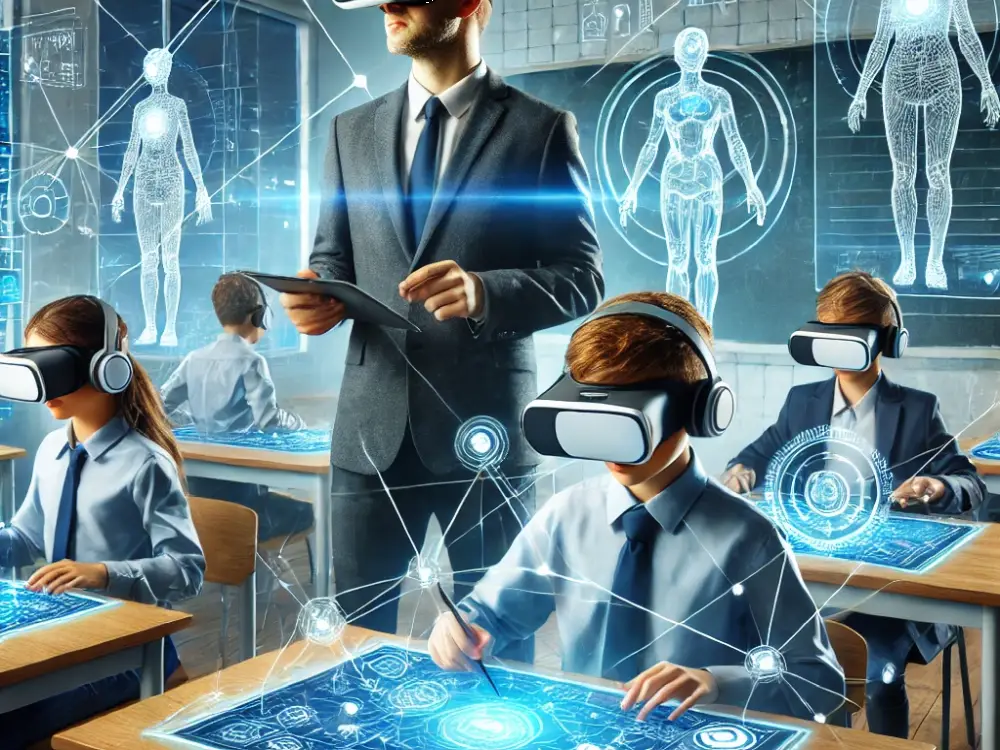
Virtual reality (VR) and augmented reality (AR) are pushing the boundaries of traditional learning by offering immersive, interactive experiences that were previously unimaginable. These technologies allow students to engage with content in ways that stimulate both the mind and the senses, making learning more engaging, memorable, and effective.
In subjects like history, science, and medicine, VR can take students on virtual field trips to ancient civilizations or allow them to explore the human body in three dimensions. AR, on the other hand, enhances the physical world by overlaying digital information on top of it. For example, using AR apps like Google Expeditions, students can interact with 3D models of objects and gain a deeper understanding of complex concepts.
In education, these tools are particularly beneficial for visual and experiential learners. VR and AR also create a safe space for experimentation and simulation, which is particularly valuable in fields like engineering, medicine, and architecture, where real-world mistakes can be costly or dangerous. As hardware becomes more affordable and software becomes more sophisticated, these technologies are poised to become more widely used in both K-12 and higher education settings.
5. Cloud-Based Learning and Collaboration Tools
Cloud-based learning platforms and collaboration tools have made it easier for students and educators to access educational materials and communicate with one another from anywhere in the world. Platforms like Google Classroom, Slack, and Trello facilitate collaboration by allowing students to work together on projects in real-time, share resources, and receive instant feedback from their teachers.
In addition to enhancing collaboration, cloud-based tools provide a centralized space for storing and managing educational resources. This reduces the need for physical textbooks, handouts, and other materials, making the learning experience more sustainable and cost-effective. Cloud platforms also provide educators with valuable analytics on student performance, which can be used to inform teaching strategies and improve outcomes.
As cloud infrastructure becomes more advanced, educational institutions can seamlessly scale their operations, offering access to learning resources and tools to an ever-growing number of students. This scalability and flexibility are crucial for institutions that need to adapt quickly to changing circumstances, such as shifting to remote learning or expanding their offerings to a global student base.
6. Learning Analytics and Data-Driven Insights
The use of learning analytics is growing exponentially as institutions look for ways to better understand and improve student outcomes. Learning analytics involves the collection and analysis of data from various educational activities—such as test scores, attendance records, and online interactions—to gain insights into student performance, engagement, and behavior.
By leveraging this data, educators can identify students who may be struggling, assess the effectiveness of teaching methods, and adjust their strategies accordingly. Platforms like Blackboard Analytics and Tableau allow institutions to analyze vast amounts of data and make data-informed decisions about curriculum development, resource allocation, and support services.
Learning analytics can also help personalize the learning experience by predicting which students may need additional help, or by providing tailored recommendations to individual learners based on their progress. By using data to drive decision-making, educators can improve student success rates, reduce dropout rates, and create a more supportive and responsive learning environment.
7. Microlearning and On-Demand Content
As attention spans shorten and the need for flexible learning options grows, microlearning has emerged as a key trend in education technology. Microlearning refers to the delivery of content in small, easily digestible chunks that can be consumed in short time intervals. This approach allows students to learn at their own pace and on their own schedule, without the pressure of long, drawn-out lessons.
Platforms like Duolingo for language learning and LinkedIn Learning for professional development offer bite-sized lessons that can be accessed anytime, anywhere. Microlearning is particularly popular in corporate training environments, where employees need to quickly acquire specific skills or knowledge without disrupting their workflow. By providing on-demand, modular learning content, microlearning empowers learners to take control of their education, making it more convenient and engaging.
Conclusion
The trends in education technology are undeniably exciting, offering unprecedented opportunities to enhance learning, increase accessibility, and personalize education. From AI-driven personalization to immersive VR and AR experiences, these innovations are changing the way students learn and interact with content. As educational institutions, businesses, and learners themselves embrace these technological advancements, we can expect a future where learning is more engaging, flexible, and efficient than ever before. The challenge now lies in effectively integrating these technologies into existing systems while ensuring that they benefit all learners, regardless of their background or resources. With careful planning and thoughtful implementation, the possibilities for education technology are limitless.